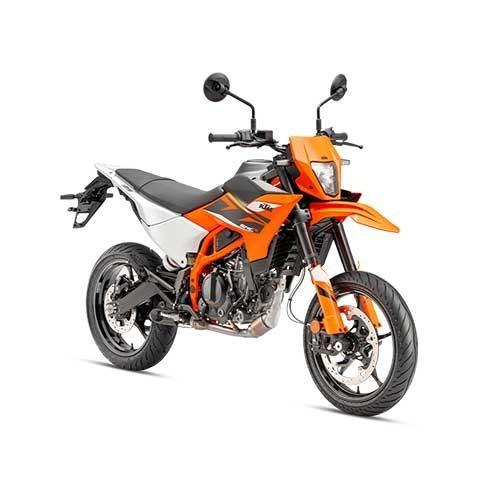
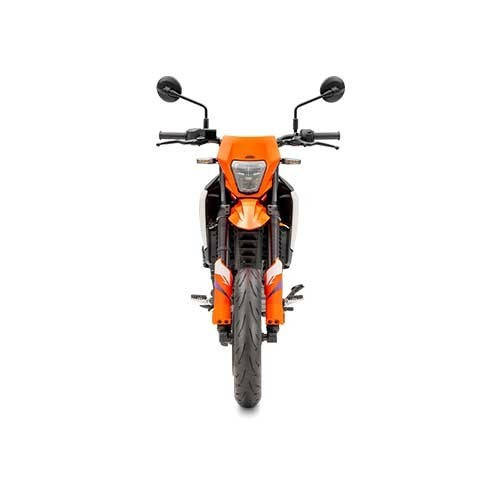
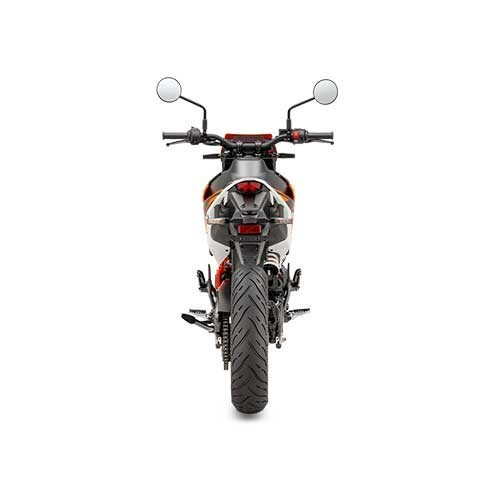
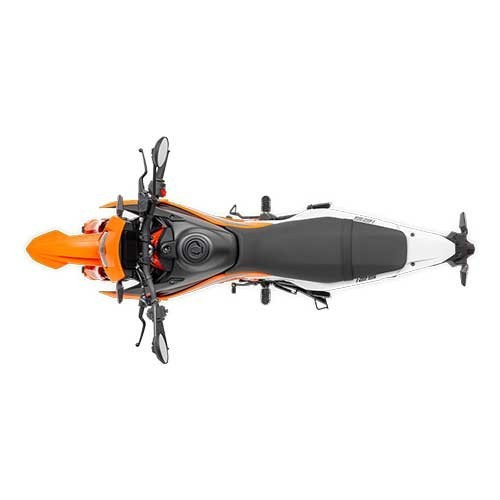
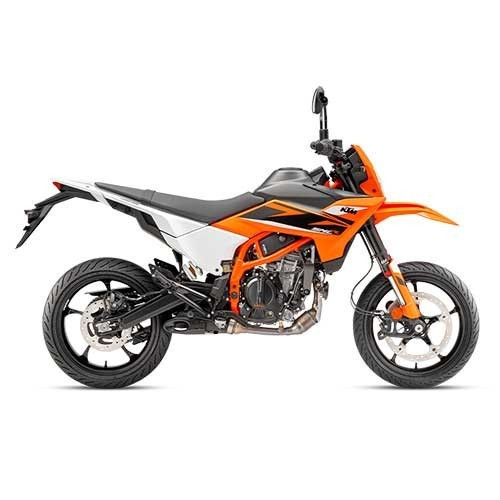
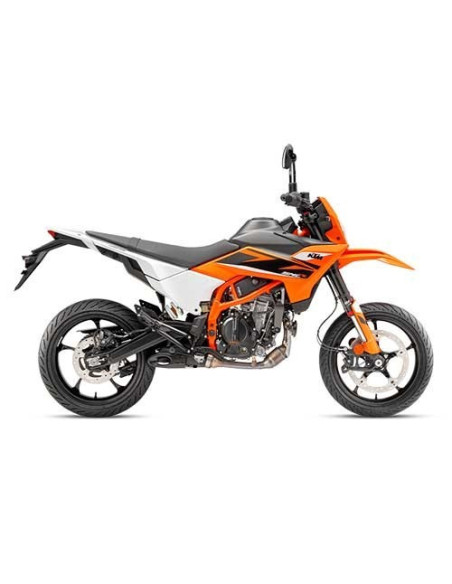
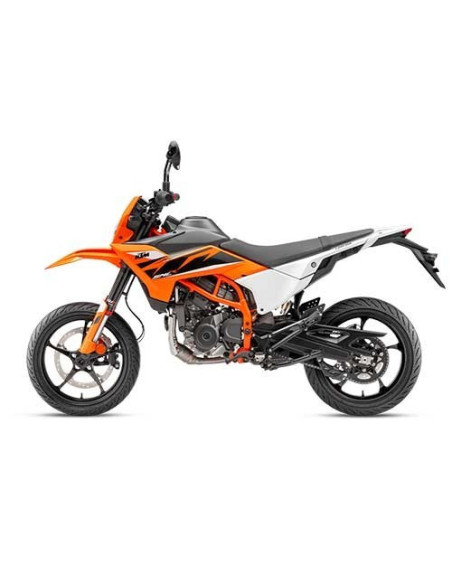

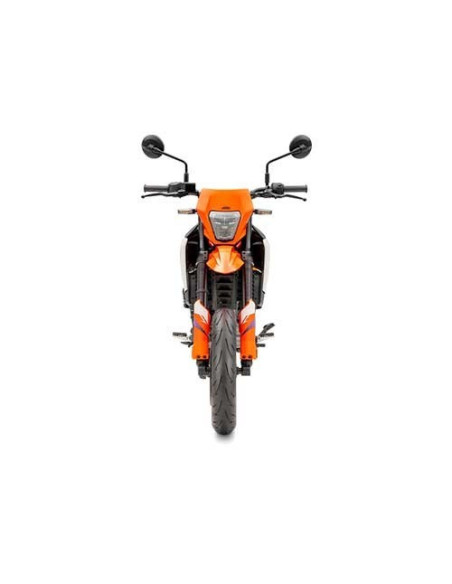
Last items in stock

The KTM story begins in 1934, long before the idea of high-performance motorcycles and super sports cars was even conceptualized. Austrian engineer Hans Trunkenpolz opened an auto repair shop in Mattighofen. Three years later, Trunkenpolz’s shop was selling DKW motorcycles, and the following year he added Opel cars to the company’s offering. The shop became known as Kraftfahrzeug Trunkenpolz Mattighofen: Kraftfahrzeug (the German word for motor vehicle), Trunkenpolz (after its founder Hans Trunkenpolz), and Mattighofen (the location of the shop). This was the origin of the KTM brand.
During World War II, KTM survived by repairing diesel engines, while Trunkenpolz’s wife ran the business. In 1951, Trunkenpolz built his first prototype motorcycle, the R100. The R100 used in-house components, except for the Rotax engines supplied by Fitchel & Sachs. In 1953, production of the R100 model began, with a team of 20 employees (including Johann Trunkenpolz). The team produced 3 motorcycles per day. In the same year, businessman Ernst Kronreif became a major investor and KTM was renamed Kronreif & Trunkenpolz Mattighofen. Over the next two years, three new products were introduced: the R125 Tourist in 1954 and the Grand Tourist and the Mirabell scooter in 1955.
KTM officially debuted in racing in 1954, winning their first title in the Austrian 125cc national championship. In 1956, they participated in the International Six Days Trials (the oldest FIM-sanctioned off-road motorcycle event), where Egon Dornauer won a gold medal on a KTM motorcycle. In 1957, KTM launched their first sports motorcycle, the Trophy 125cc, named in honor of their victory in the Austrian championship three years earlier. That same year, KTM launched their first moped – the Mecky – followed by the Ponny I in 1960, the Ponny II in 1962 and the Comet in 1963. While the Mecky and Ponny became reliable urban transportation options, the Comet became a favorite for off-road racing. KTM won their first FIM Motocross GP title in 1974, with Russian motocrosser Guennady Moisseev winning the 250cc class on a KTM 250. This victory was the first of over 260 world titles that KTM would achieve over the next 40 years.
By 1971, KTM had expanded its workforce to 400 employees and offered 42 different models. They also produced motorcycles dedicated exclusively to racing for the industry. In the 1970s and 1980s, KTM began producing radiators for European car manufacturers, a business that contributed significantly to their revenues. In 1978, KTM founded its US subsidiary, KTM North America, based in Lorain, Ohio. Back in Austria, the company was rebranded as KTM Motor-Fahrzeugbau KG in 1980, and by 1981 it had 700 employees. That year, their revenues reached $750 million, with international business accounting for 76% of that money.
In 1992, the product portfolio that KTM had developed in the 1970s and 1980s was split into four entities: bicycles were produced by KTM Fahrrad GmbH, car radiators by KTM Kühler GmbH, tools by KTM Werkzeugbau GmbH, and the motorcycle division, the core of KTM's early successes, was renamed KTM Sportmotorcycle GmbH.
In 1995, KTM acquired Husaberg AB of Sweden, and in 2013 it acquired another Swedish competitor, Husqvarna. By 2015, KTM had become the largest motorcycle manufacturer in Europe, with revenues exceeding €1 billion, and had reintegrated three of the four divisions introduced after the 1992 split.
KTM currently holds 96 world titles in MXGP, MX1 and MX2 since 1974, and 114 titles in the E1, E2, E3 and Super Enduro categories since 1990. The company has achieved 260 world titles and three consecutive AMA Supercross championships between 2015 and 2017. KTM debuted in the Dakar Rally in 1994 and dominated from 2001 to 2018. KTM has also participated in the Atlas Rally and Rallye du Maroc, holding 37 world titles in cross-country rallies and being 15-time winners of the FIM Cross-Country Rallies World Championship.
In 2003, KTM entered road racing, competing in the 125cc and 250cc classes. KTM won the Grand Prix constructors' championship in 2005, the Moto3 manufacturer titles in 2012, 2014 and 2016, and the Moto3 world title in 2016. KTM also competes in the MotoGP and Moto2 classes and participated in the German International Superbike Championships between 2009 and 2011. In 2008, KTM introduced the X-Bow, an ultralight hypercar designed for both street and track use. The X-Bow won the supersports class of the British GT Championship in 2009, the GT4 class in 2011, and a GTS championship in the USAC-sanctioned GT World Challenge series in 2016.
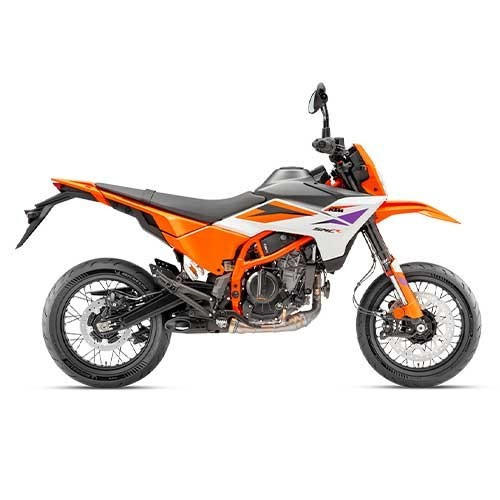
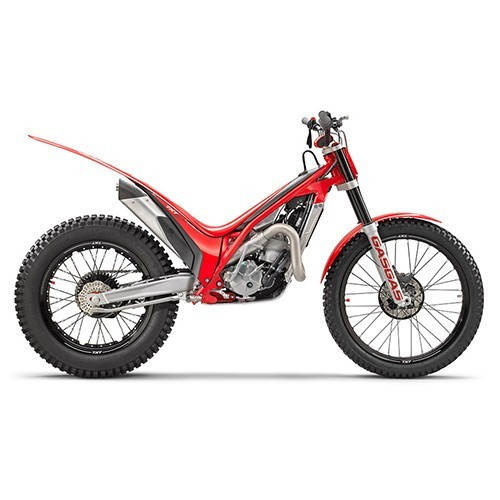
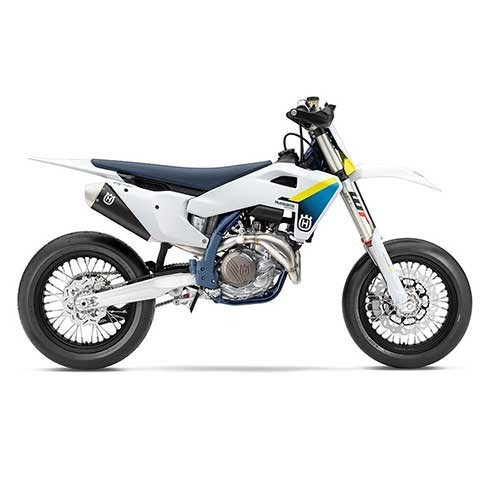
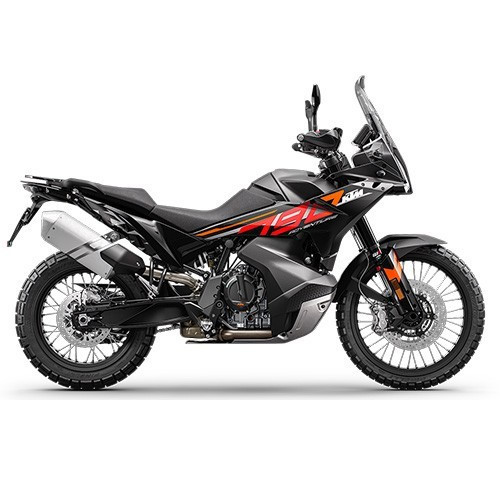
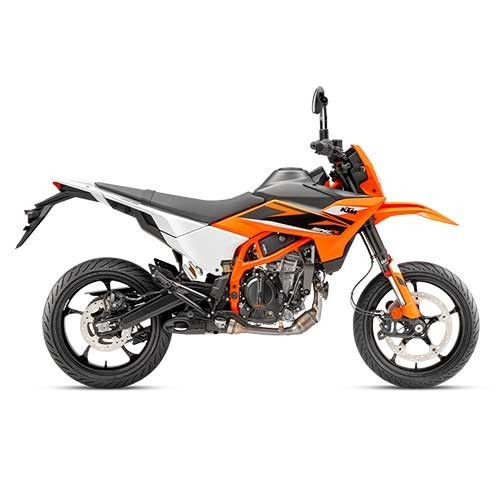
KTM specializes in high-performance motorcycles for street, off-road and track use. Their line of off-road motorcycles is divided into pa
The power displayed in the vehicle's technical specifications refers strictly to the constructive power that the engine can develop*, any differences between the technical specification sheets and the official documents may arise following the homologations of the accredited institutions.
We deliver the units to clients in compliance with the legal requirements in the field, accompanied by the documents proving the type of homologation (or proving that no homologation is required), meaning that our company is not responsible for the client's subsequent decision to make modifications (derestrictions, software interventions for increasing/decreasing power, torque, or sound level, etc.). Furthermore, upon discovering illegal interventions during revisions or the vehicle arriving at the service center for any other reason, the warranty for the respective products is voided.
__ * Power is always calculated at the engine level, not at the wheel, so in certain situations there may be differences between the declared power and the actual power at the wheel during dynamometer testing.
The images of the products presented on the site are for presentation purposes and may differ in any way (color, appearance, etc.) from the images of the delivered products, which may present minor deviations from the photos and descriptions presented on the site.
Offers are available while stocks last.
Order validation will only take place after telephone confirmation by the sales representative.